Landing Page vs Full Website: Which Fits Your Business?
Understand the differences between a landing page and a full website, explore use cases and choose a structure that fits your business goals.
barengin.id संपादकीय टीम · 5 मिनट का पठन · अपडेट किया गया
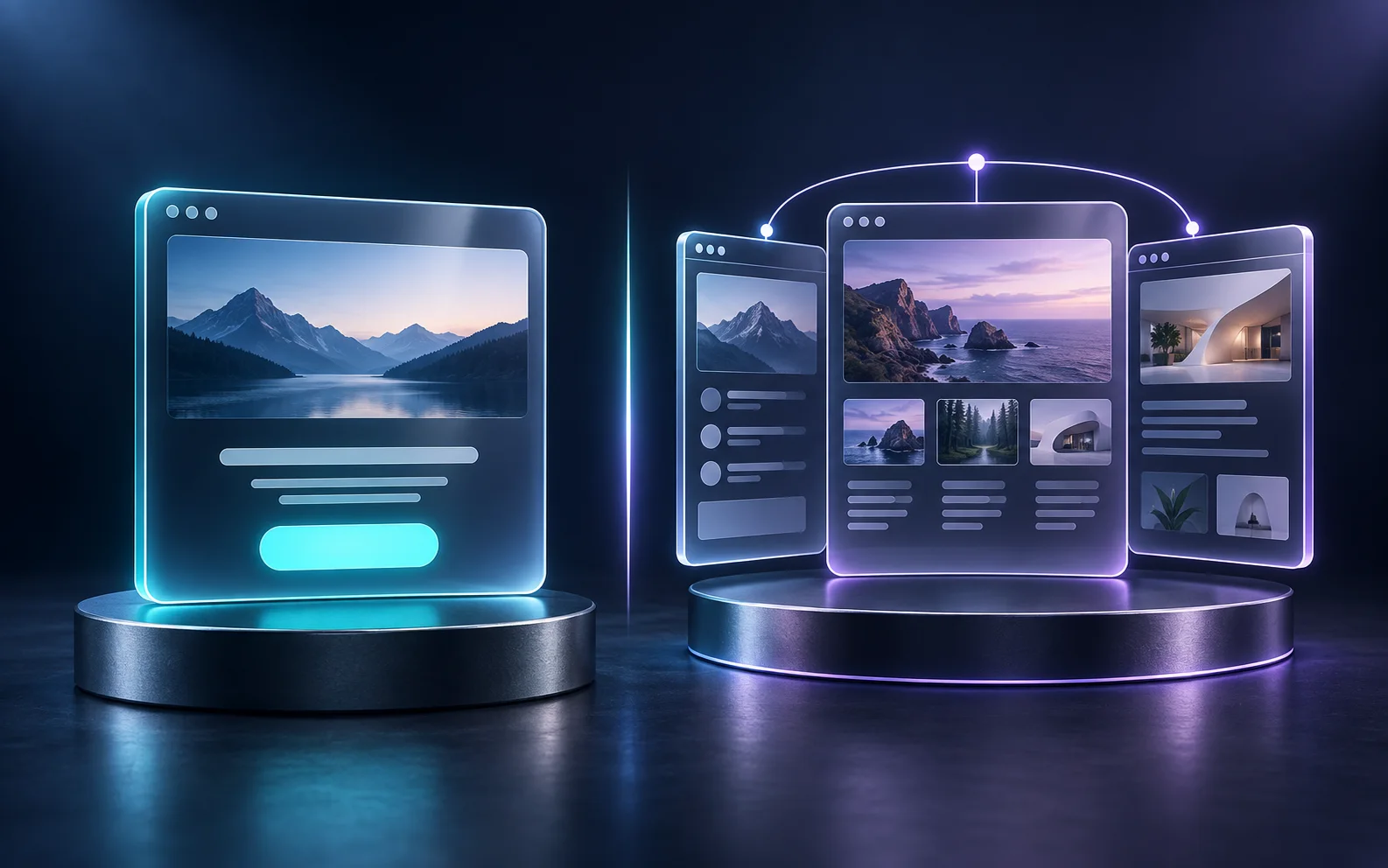
A landing page and a full website serve different scopes. A landing page usually focuses on one offer and one main action, while a full website provides several pages for a wider range of information needs. The right choice depends on your business goals, available materials and how potential customers discover your services.
Before deciding on a design, ask this question: after opening the page, what does a visitor need to know, and what action do you want to help them take? That answer is more useful than immediately deciding how many pages you need.
What is the difference between a landing page and a full website?
A landing page is a destination designed for a specific context, such as promoting one service, registering for an event or introducing a product. It can contain a lot of content, but its sequence still supports one main goal. Its call to action might invite visitors to book a consultation, request a quote or register.
A full website connects several pages through navigation. Visitors can move from the company profile to services, portfolio, articles and contact information according to their needs. A landing page can also be part of a full website; these options do not have to exclude each other.
- Landing page focus: one context, one primary offer and a focused path to action.
- Full website focus: several information needs, multiple services and navigation between topics.
- Landing page content: the offer, benefits, supporting evidence and a call to action.
- Full website content: information for each page, a menu structure and a content update plan.
When is a landing page a better fit?
Consider a landing page when you want to explain a specific offer. For example, a photography business might be offering product photography sessions for small businesses. The page can directly explain the photographs customers receive, service scope, work examples, booking process and how to request a time slot.
Visitors arriving from that promotion do not need to read the entire company profile first. However, provide clear business identity and contact information so they have enough context to assess the offer.
A landing page can also help when your initial materials are limited. Start with information that is ready and can be substantiated. Avoid filling the page with unsupported claims, testimonials or performance figures.
When is a full website a better fit?
A full website makes more sense when a business has several services that need separate explanations. A digital studio, for example, might need pages for website development, application development, a portfolio and guidance for potential customers.
Separate pages help visitors find relevant information without having to navigate one overcrowded page. The team can also update articles or add projects through an admin panel.
Before adding many pages, establish who will write and maintain them. Well-planned pages need clear information, rather than simply more menu items.
Is a full website always better for SEO?
Not automatically. More pages do not guarantee visibility or rankings on Google. Pages need to address readers' needs, use titles that describe their content and be accessible to search engines. A full website creates room for several topics, but every page still needs a clear purpose.
A landing page can also be prepared for organic search if its content is relevant and it can be indexed. Distinguish pages intended to be discovered through search from temporary campaign pages. Make indexing decisions according to a page's function, rather than simply its format.
For content management fundamentals, read Google's SEO Starter Guide. After publication, evaluate actual recorded visits and customer enquiries.
How to choose for your business
- Write down the main goal: introducing the business, explaining one offer or receiving project enquiries.
- List the questions potential customers frequently ask before contacting your team.
- Group those questions. If there are several distinct groups, consider separate pages.
- Review the materials already available: copy, images, videos, portfolio and contact information.
- Identify who will manage updates and define the scope of the first phase.
For example, a business with one main offer and a focused promotion may start with a landing page. A business with several services and a growing portfolio may plan a full website. These are examples of useful considerations, rather than rules for every business.
Prepare a starting point for your project
Once you have chosen a direction, put together a clear website brief. If work examples are important to your customers, also learn how to present a portfolio as case studies.
barengin.id can help review your goals, information structure and required features. Start with a conversation about your website needs so the format fits your business and the materials ready for development.
 barengin.id संपादकीय टीम
आपके व्यवसाय के लिए डिज़ाइन, तकनीक और विचार।